

It’s that time of year when your Lawn Care applies your second lawn treatment of the season! So what’s next? Do you water your lawn or let it dry on? When should you mow? How long? If you’re asking these questions, you’re not alone. We turned to Steve Daly for answers, and we got it straight! Typically, your Perma-Green technician will apply slow-release fertilizer and post-emergent weed control. This step is crucial for setting your lawn up for success throughout the warm season. By taking the right post-treatment actions, you can maximize the benefits of the application and ensure lasting weed control for lawns in Northwest Indiana.
At Perma-Green, we’re dedicated to helping you get the most out of every treatment. That’s why we’ve compiled this comprehensive guide on what to do after your 2nd treatment.
But before taking a deep dive into best-practice actions, we take a closer look at what Perma-Green’s 2nd Application lawn treatment does for your lawn and why it’s essential.
What’s in the 2nd App | Northwest Indiana’s Best Weed Treatment for Lawns

In Northwest Indiana, the typical second application in May for a full-season lawn care program (like those offered by companies such as Perma-Green in Valparaiso) generally includes the following:
Second Application – May (Late Spring Treatment)
- Balanced Lawn Fertilizer
- A slow-release nitrogen-rich fertilizer to promote green growth and root development.
- Often labeled as a “late spring” fertilizer, this builds on the early-season application to thicken turf before summer stress.
- Broadleaf Weed Control
- Post-emergent herbicides are used to control weeds like:
- Dandelions
- Clover
- Chickweed
- Plantain
- This is when many broadleaf weeds are actively growing, making control more effective.
- Optional: Grub Preventative (Early Application)
- Some full-season plans include a preventative grub treatment around late May to early June.
- This is especially important in areas with a history of Japanese beetles or lawn grub damage.
Why It’s Important
May is prime time for weed growth, and this second application prevents them from overtaking the lawn.
The fertilizer helps the lawn recover from spring mowing and prepares it for summer heat.
Consistency in treatment timing supports thicker, greener turf throughout the growing season.
Post-Weed Treatment Best Practices in Lake, Porter, and LaPorte County
1. Wait 24–48 Hours Before Mowing

Why it matters:
The second treatment includes liquid weed control, which needs time to fully absorb into the leaves of weeds such as dandelions and clover. Mowing too soon may remove the treated leaf tissue before the herbicide can reach the roots. While this is the traditional rule, Steve Daly points out that some recent studies suggest that when liquid weed control is applied, the lawn can be mowed once the treatment is dry. Contact Perma-Green for the advantages of liquid fertilizers and weed control for lawns. PERMA-GREEN CONTACT
How does this support weed control?
By giving the product ample time, you ensure that the herbicide reaches the weed’s root system, effectively stopping the plant’s growth and preventing it from regrowing in the future.
2. Water Deep After 24 Hours (If There’s No Rain)
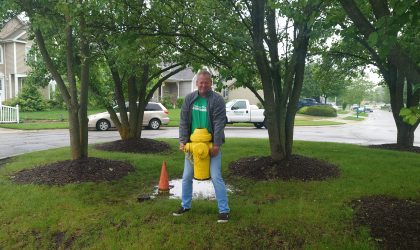
Steve Daly, Perma-Green President
Why it matters:
Many fertilizers, especially granular slow-release types, require moisture to activate. However, if you water too soon-particularly when liquid weed control has been applied-you risk washing off the treatment from the weed leaves.
How does this support weed control?
Watering after 24 hours helps the fertilizer work properly by releasing nutrients deep into the soil. This nourishes your grass, making it denser and more capable of competing with weeds.
NOTE: Perma-Green uses Acelepryn grub control when customers include it in their full-season program. Unlike traditional grub control like Merit, which requires immediate watering to activate, Acelepryn can bind to organic matter in the soil and remain effective without soaking right after application, making it easier for busy homeowners. To learn more about the environmental benefits of Acelepryn- see below.
3. Don’t Pull Weeds Too Soon

Why it matters:
It might be tempting to pull out weeds that still show on your lawn after treatment. However, most broadleaf herbicides take 7 to 14 days to work fully. Pulling weeds before the process is complete can interrupt the treatment’s efficacy.
How does this support weed control?
Allowing the herbicide time to work ensures that the weeds are being killed at the root, leading to longer-lasting control and reducing the chance of re-growth.
4. Keep Mowing Height Around 3–3.5 Inches

Why it matters:
Maintaining a higher grass height not only shades the soil to deter weed seed germination but also promotes deeper root growth. This is particularly important as the summer heat sets in.
How does this support weed control?
A thicker, taller lawn naturally competes better against weeds. Healthy, well-maintained turf leaves little room for weed seeds to take root and establish themselves.
To learn more about Best-Practice lawn maintenance in Northwest Indiana, here is a Link to a month-by-month calendar!
Choosing the Best Lawn Maintenance
5. Ask About Grub Prevention If You Haven’t Yet | NWI’s Safe Option
Why it matters:
Grubs can cause significant damage by feeding on your grass roots, leading to weak, patchy areas in your lawn. In regions like Northwest Indiana, timely grub prevention is vital to maintaining a full, healthy lawn.
How does this support weed control?
A robust root system developed with proper grub control helps the lawn resist weed invasion. When your grass is strong and full, it naturally crowds out weeds and minimizes bare spots.
Grubs in Grass? Get Safe with Perma-Green’s Pet & Family-Friendly Treatment

Why Perma-Green Uses Acelepryn Grub Control (And Not Merit)
At Perma-Green, we’re committed to protecting both your lawn and the environment. That’s why we use Acelepryn®, an advanced, environmentally responsible grub control product that outperforms older treatments like Merit®-without costing you more.
Key Advantages of Acelepryn Over Merit:
1. Environmentally Safe for Pollinators and Pets
Acelepryn is the only grub control approved by the EPA as a reduced-risk pesticide, meaning it poses no known harm to bees, pets, or wildlife when appropriately applied.
By contrast, Merit (imidacloprid) is classified as a neonicotinoid, a chemical group under increasing scrutiny due to its impact on pollinators and groundwater.
2. Season-Long Protection
A single application of Acelepryn delivers full-season grub control, protecting your lawn from Japanese beetles, European chafers, and other root-feeding pests from spring through late summer.
3. No Watering-In Required
Unlike Merit, which requires immediate watering to activate, Acelepryn can bind to organic matter in the soil and remain effective without soaking right after application, making it easier for busy homeowners.
4. Highly Targeted & Low-Toxicity
Acelepryn targets pests without affecting earthworms, beneficial insects, or soil health. It works by interrupting grub development rather than poisoning the entire insect population in the soil.
Acelepryn Costs More-But You Don’t Pay More
Although Acelepryn is significantly more expensive for lawn care providers to purchase than Merit, Perma-Green doesn’t pass that cost onto our customers. We believe that environmentally conscious choices shouldn’t be a luxury.
You’ll get superior protection, a safer yard, and season-long peace of mind-all at the same competitive price as companies still using outdated grub control.
Schedule Your Perma-Green No-Cost Lawn Evaluation and Estimate Today! Click the PG Logo!
