
Brown Patch Lawn Disease: Symptoms and What Causes It
Brown patch is the fungal disease we’re seeing most across Northwest Indiana lawns this wettest summer on record, and it’s a strong match for the exact conditions this season has produced - warm temperatures, high humidity, and grass that stays wet for extended stretches.
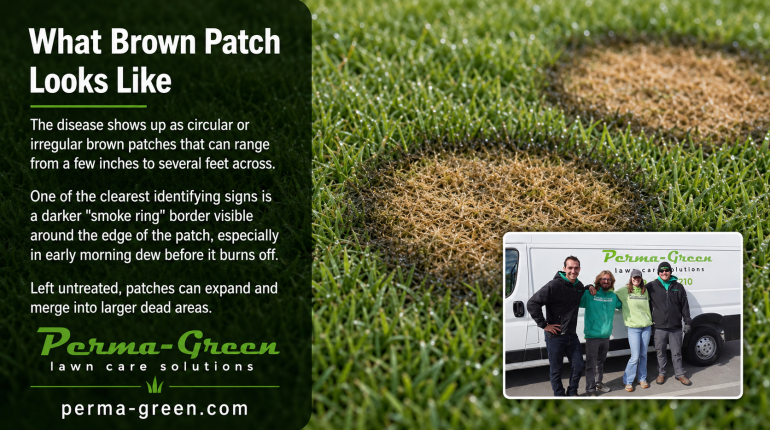
What Brown Patch Looks Like
The disease shows up as circular or irregular brown patches that can range from a few inches to several feet across. One of the clearest identifying signs is a darker “smoke ring” border visible around the edge of the patch, especially in early morning dew before it burns off. Left untreated, patches can expand and merge into larger dead areas.
Why This Season Made It Worse
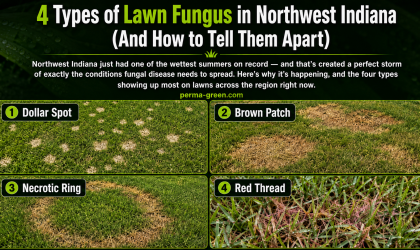
Brown patch tends to hit harder on lawns that are already under stress - turf that’s been overwatered, mowed too short, or is fighting nitrogen imbalance is more vulnerable. This is also why the response matters as much as the identification: adding more water to a lawn already showing brown patch feeds the fungus rather than helping the grass recover.
Where It Shows Up Most in Northwest Indiana
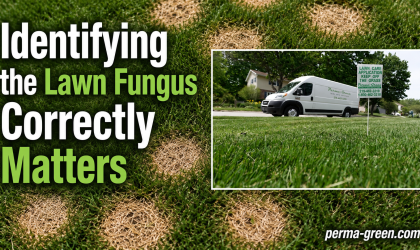
Because Northwest Indiana’s soil varies so much by area, brown patch risk isn’t identical everywhere. Clay-heavy soil, like much of Porter County and Lake County, holds surface moisture longer and creates more favorable conditions for it to take hold and spread.
This is exactly why a one-size-fits-all lawn program doesn’t hold up in Northwest Indiana. A treatment plan built for national averages doesn’t account for the difference between a clay-heavy yard in Crown Point and a sandy yard in DeMotte - and that gap is where brown patch and other diseases find room to spread. Knowing your specific soil, and treating for it, is the difference between a lawn that recovers this season and one that keeps fighting the same problem. Get a free lawn evaluation and find out exactly what your soil and your lawn need.
Related: Lawn Disease Alert: A County-by-County Northwest Indiana Guide covers Porter and Lake County’s fungal risk in more depth.
Confirm It Before You Treat It
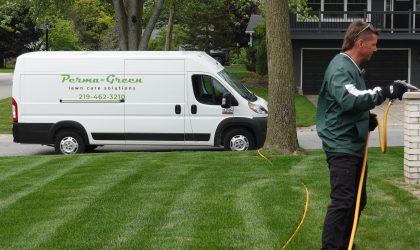
If your lawn is showing patches like this, the right first step is confirming it’s actually brown patch and not one of the other common fungal diseases this season, since necrotic ring spot in particular can look similar at a glance. Not sure if it’s a disease at all? Rule out heat and drought stress first. Perma-Green’s OISC-certified technicians use Syngenta’s environmentally responsible treatments to target the specific disease present, rather than a one-size-fits-all approach. Get a lawn evaluation to find out exactly what your lawn needs.

What Comes Next: Fall Lawn Recovery
Brown patch can leave turf thin and weakened, so the next step is helping the lawn recover before winter, not just identifying the disease.
If fungus, heat stress, drought stress, heavy rain, or thinning turf weakened your lawn this summer, fall is the recovery window.
Fall fertilizer helps the lawn rebuild strength, support root growth, store nutrients before winter, and prepare for healthier growth when the ground thaws in spring.
READ: Northwest Indiana Lawn Recovery Starts This Fall
Not sure what is affecting your lawn?
Get a free Perma-Green lawn evaluation before guessing at the fix.