
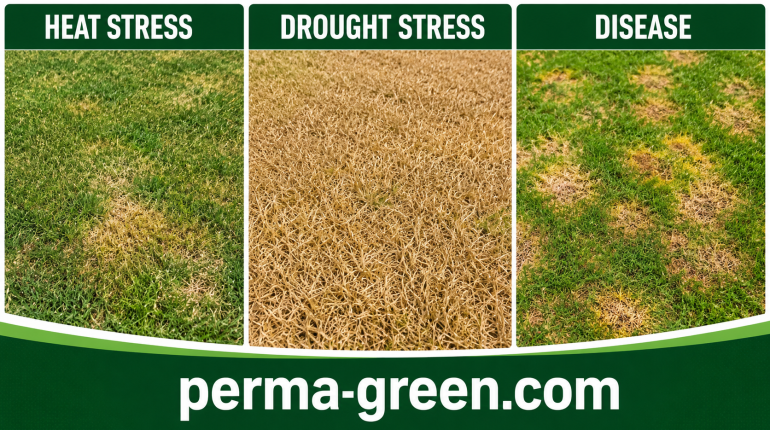
Northwest Indiana lawn recovery starts this fall for lawns that were weakened by heavy rain, humidity, lawn fungus, heat stress, drought stress, compacted soil, or thinning turf during spring and summer.
This has not been a normal lawn care season across Northwest Indiana. Many homeowners saw grass that looked healthy in spring suddenly turn patchy, yellow, brown, thin, or stressed as the season changed. In some lawns, the issue was fungal disease. In others, it was heat stress, drought stress, shallow soil, compacted clay, sandy soil, or a combination of several problems at once.
That is why fall matters so much.
Fall is not just the end of the lawn care season. For Northwest Indiana lawns, fall is the recovery window.
What This Spring and Summer Did to Local Lawns
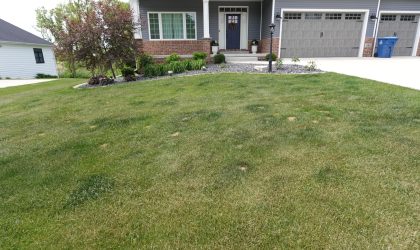
This season created a difficult mix of conditions for lawns across Lake County, Porter County, LaPorte County, and surrounding Northwest Indiana communities.
Many lawns faced:
- Heavy rain and extended wet periods
- High humidity
- Dollar spot, brown patch, red thread, necrotic ring spot, and other fungal pressure
- Heat stress after wet weather
- Drought stress in faster-draining soils
- Compacted soil in older neighborhoods
- Thin turf where disease, weeds, or stress weakened the lawn
- Hot edge stress near driveways, sidewalks, curbs, and streets
When a lawn goes through that kind of stress, the damage often lasts beyond summer. Brown patches may fade, but weak roots, thin turf, compacted soil, and nutrient loss can carry into fall and even affect how the lawn wakes up next spring.
First, Understand What Damaged the Lawn
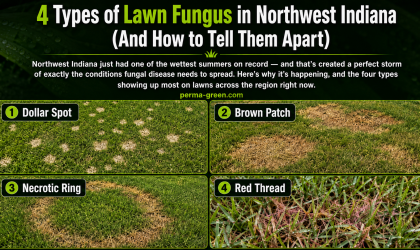
Before you can build the right recovery plan, you need to understand what caused the damage. This season, Northwest Indiana homeowners have faced several issues that can look similar from a distance but require different responses.
A lawn with fungal disease may need a different plan than a lawn dealing with heat stress. A lawn with drought stress may need a different watering approach than a lawn with compacted clay soil. A lawn with dollar spot may need a different fertilization strategy than a lawn with brown patch.
Use these Perma-Green guides to help identify what you may be seeing:
- Lawn Disease Symptoms: How to Tell If It’s Fungus, Heat, or Something Else
- 4 Types of Lawn Fungus in Northwest Indiana: And How to Tell Them Apart
- Dollar Spot Lawn Disease: Symptoms and the Fertilizer Connection
- Brown Patch Lawn Disease: Symptoms and What Causes It
- Red Thread Lawn Disease: Identification and Causes
- Necrotic Ring Spot: Symptoms and How It Differs from Brown Patch
For the full regional picture, start with Perma-Green’s county-by-county guide:
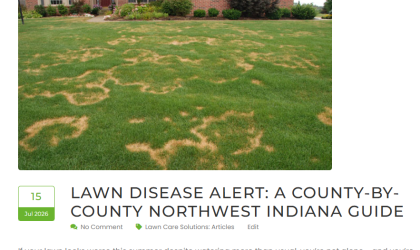
Lawn Disease Alert: A County-by-County Northwest Indiana Guide
Once you know whether the lawn is dealing with fungus, heat stress, drought stress, compaction, or soil-related problems, the next step is building a fall recovery plan.
Why Fall Is the Recovery Window

Daly’s Tips are updated on each NWI community page. Perma-Green supports homeowners with Local Guides.
Cool-season lawns in Northwest Indiana have a better chance to recover in fall because temperatures are more favorable and the grass can focus more energy on root growth.
That makes fall the right time to help the lawn rebuild.
The goal is not just to make the lawn look better for a few weeks. The goal is to strengthen the lawn before winter, improve root health, fill in weak areas when appropriate, and prepare the lawn for a healthier spring green-up when the ground thaws.
A lawn that struggled with fungus, drought stress, heat damage, or compaction this summer should not be treated like nothing happened. It needs a recovery plan.
Fall Fertilizer and Winterizer Are Critical
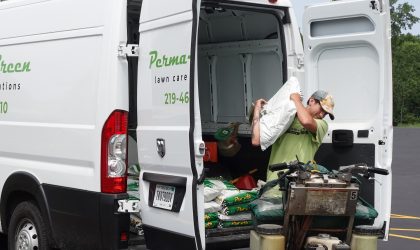
Fall Fertilizer and Winterizer are the MVP treatments of a full-season lawn care program.
These treatments matter because they support the lawn in three key stages.
First, they help the lawn recover from summer stress.
Second, they help the lawn build and store strength before winter.
Third, they support how the lawn responds when the ground thaws and growth begins again in spring.
After a season with heavy rain, humidity, lawn disease pressure, heat, and drought stress, fall treatments are not optional extras. They help the lawn recover properly.
Learn more about why fall fertilizer matters here:
Why Fall Fertilizer for Grass Is Critical
Recovery Depends on What Damaged the Lawn
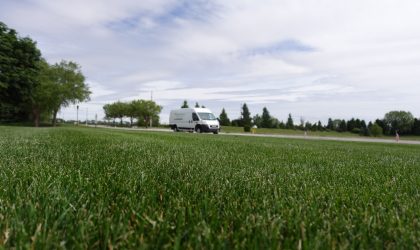
Not every stressed lawn needs the same solution.
A lawn weakened by dollar spot may need a different recovery plan than a lawn struggling with compacted clay soil. A lawn in sandy soil may need a different watering strategy than a lawn that stayed wet too long. A lawn with hot edge stress near concrete may not have the same problem as a lawn with circular fungus patches.
That is why correct diagnosis matters.
Perma-Green looks at the lawn’s actual condition, the soil, the symptoms, and the season before recommending a plan. The goal is to avoid guessing and to help homeowners understand what their lawn really needs.
What Fall Recovery May Include
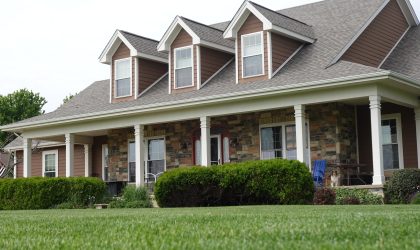
The best recovery plan includes 2 Fall Treatments
Depending on the lawn, fall recovery may include several parts of a full-season plan.
Fall Fertilization

Fall Fertilizer is an MVP…maybe the GOAT!
Fall fertilization helps restore nutrients and support root development after summer stress. This is especially important when heavy rainfall, disease pressure, or heat weakened the lawn.
For lawns affected by dollar spot, fertilization is especially important because dollar spot is strongly associated with under-fertilized turf. That does not mean every lawn needs the same treatment. It means the lawn should be evaluated and put on a plan that matches its soil, turf condition, and seasonal stress.
Winterizer
Winterizer helps prepare the lawn for dormancy and supports spring response when the ground begins to thaw. It is one of the most important treatments in the full-season program because it works beyond fall.
A good winterizer treatment helps the lawn enter winter stronger and respond better when spring growth begins.
Core Aeration
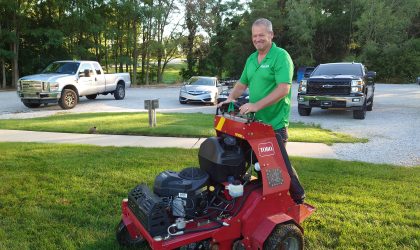
Core Aeration should be integrated with a lawn plan
Core aeration can help relieve compacted soil and improve movement of air, water, and nutrients into the root zone. This is especially important in clay-heavy lawns and older neighborhoods where soil compaction is common.
Lake County lawns, older subdivisions, and high-traffic properties may especially benefit from aeration as part of a broader recovery plan.
Overseeding

Overseeding may help fill thin areas where turf was weakened by disease, drought, heat, or summer stress. It works best when it is part of a plan, not a random one-time fix.
For Perma-Green customers, aeration and seeding should align with the lawn’s full-season program so recovery services support the rest of the treatment plan.
Weed Control
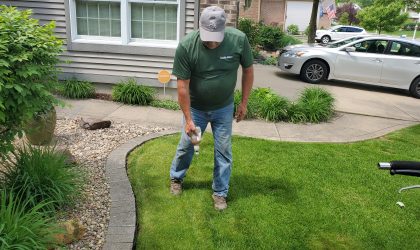
Thin turf gives weeds more room to move in. Fall weed control helps reduce pressure and supports a thicker lawn going into the next season.
When summer disease or stress thins the lawn, weeds often move into the open space. A fall plan helps reduce that pressure.
Lawn Evaluation
A lawn evaluation helps determine whether the issue is disease, drought stress, heat stress, soil compaction, poor watering, shallow soil, or a combination of problems.
That matters because the wrong fix can waste time, money, and the rest of the season.
Why Local Soil Matters in Northwest Indiana

Northwest Indiana lawns don’t all face the same conditions.
Porter County and many Valparaiso and Chesterton lawns often deal with clay-heavy soil that holds moisture during wet stretches, then hardens during heat and dry weather. This can increase fungal pressure during wet periods and create drought-like stress when the soil hardens later.
Lake County lawns, including many older subdivisions around Crown Point, Hobart, Merrillville, Highland, Munster, Dyer, Schererville, and St. John, often face compaction, heavy use, curbside heat stress, and soil structure issues. For many of these lawns, aeration is an important part of recovery.
LaPorte County and DeMotte-area lawns can include sandier soils that dry out faster, even after wet periods. These lawns may need a different watering strategy and a different recovery approach than clay-heavy lawns.
That means the right fall recovery plan depends on the lawn’s location, soil, drainage, and symptoms.
Use Perma-Green’s local resources to learn more about your area:
- Northwest Indiana Lawn Care Directory
- Chesterton Lawn Care
- Crown Point Lawn Care
- DeMotte Lawn Care
- Hobart Lawn Care
- Valparaiso Lawn Care
- Lake County Lawn Care
- LaPorte County Lawn Care
- Porter County Lawn Care
Do Not Wait Until Spring to Fix Summer Damage

One of the biggest mistakes homeowners make is waiting until spring to deal with summer lawn damage.
By spring, the lawn has already survived winter in a weakened state. Thin turf, weak roots, compacted soil, and unresolved stress can make it harder for the lawn to recover cleanly.
Fall gives the lawn a better chance to rebuild before winter arrives.
If your lawn is thin, patchy, discolored, or still showing signs of summer stress, now is the time to understand what happened and what to do next.
Start With a Perma-Green Lawn Evaluation
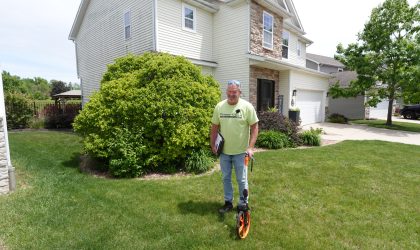
If you are not sure whether your lawn has disease damage, drought stress, heat stress, compaction, or soil-related issues, start with a Perma-Green lawn evaluation.
Perma-Green’s local technicians understand Northwest Indiana lawns, soil differences, and seasonal timing. They can help identify what damaged your lawn and recommend the right next step for recovery.
Schedule a free lawn evaluation here:
You can also learn more about Perma-Green’s full lawn care programs here:
The Bottom Line on Northwest Indiana Lawn Recovery

Northwest Indiana lawns had a rough spring and summer. Heavy rain, humidity, fungal disease, heat, drought stress, compaction, and weak turf all played a role.
Fall is the Northwest Indiana lawn recovery window.
Fall Fertilizer and Winterizer are the MVP treatments of a full-season lawn care program because they help the lawn recover now, prepare for winter, and support stronger growth when the ground thaws in spring.
If your lawn is showing the effects of this season, do not wait until next year to address it. Get it evaluated this fall and start building the recovery plan now.
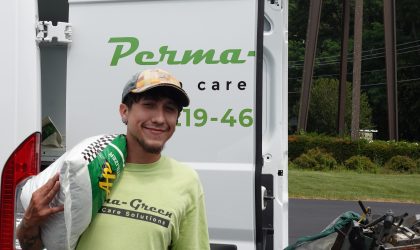
Perma-Green Lawn Care is certified and licensed by the Office of Indiana State Chemist (OISC)