
Dollar Spot Lawn Disease: Symptoms and the Fertilizer Connection
Dollar spot is one of the fungal diseases we’re seeing frequently on Northwest Indiana lawns this season, and it comes with a detail that sets it apart from the others: it’s closely tied to how well-fed your lawn is.
What Dollar Spot Looks Like
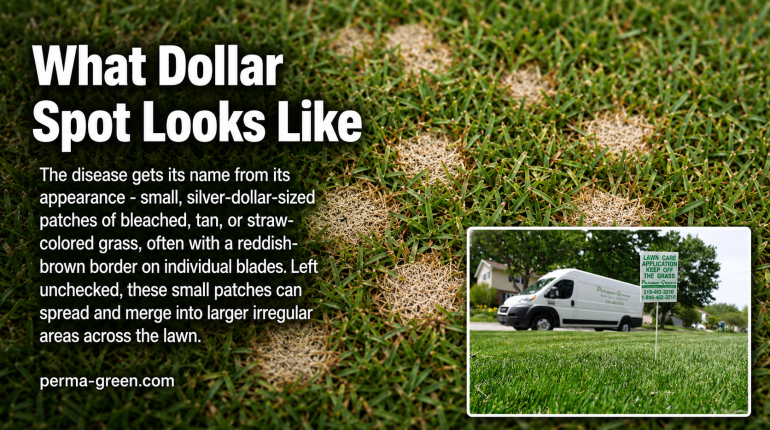
The disease gets its name from its appearance - small, silver-dollar-sized patches of bleached, tan, or straw-colored grass, often with a reddish-brown border on individual blades. Left unchecked, these small patches can spread and merge into larger irregular areas across the lawn.
Why Dollar Spot Is Different: The Fertilizer Connection
What makes dollar spot different from brown patch or red thread is how strongly it’s associated with nitrogen deficiency. Lawns that are under-fertilized are considerably more vulnerable, which means a dollar spot outbreak is often an indicator that you’ll need a local professional to identify the issue and incorporate a solution in your lawn’s fertilization program–you may need more than just fungal treatment.
Even a Well-Managed Lawn Can Get Dollar Spot This Season
It’s worth being direct about something here: in a season with this much record rainfall, even a lawn getting the best-practice watering and mowing can still develop dollar spot or another fungal disease. Excess moisture is simply a strong driver of fungal pressure on its own, regardless of how well everything else is managed. Lawn disease solutions require knowing your specific soil, not applying a generic national program.
This is exactly why local expertise matters in Northwest Indiana. A fertilization plan calibrated for clay-heavy soil in Porter or Lake County isn’t the right plan for sandy soil in LaPorte County or DeMotte, and applying the wrong one is one of the most common ways a treatable disease turns into a repeat problem.
Confirm It Before You Treat It
If you’re seeing small, scattered bleached patches across your lawn, get it confirmed before treating - it can resemble early red thread before the reddish threads are fully visible. Not sure if it’s disease at all? Rule out heat and drought stress first, or see the four common fungal types we’re tracking this season. Perma-Green’s technicians can identify dollar spot on-site and put together a fertilization plan built for your specific soil. Get a free lawn evaluation to get started.

What Comes Next: Fall Lawn Recovery
Because dollar spot is often connected to weakened or under-fertilized turf, fall fertilizer is especially important after a dollar spot outbreak.
If fungus, heat stress, drought stress, heavy rain, or thinning turf weakened your lawn this summer, fall is the recovery window.
Fall fertilizer helps the lawn rebuild strength, support root growth, store nutrients before winter, and prepare for healthier growth when the ground thaws in spring.
READ:
Northwest Indiana Lawn Recovery Starts This Fall
Why Fall Fertilizer Is the MVP Treatment for Northwest Indiana Lawns
Not sure what is affecting your lawn?
Get a free Perma-Green lawn evaluation before guessing at the fix.