
Red Thread Lawn Disease: Identification and Causes
Red thread is probably the most visually alarming lawn disease homeowners run into, simply because nothing else in a typical lawn looks quite like it. It’s also one of the fungal diseases we’re seeing this wettest summer on record across Northwest Indiana, particularly in fescue lawns.
What Red Thread Looks Like
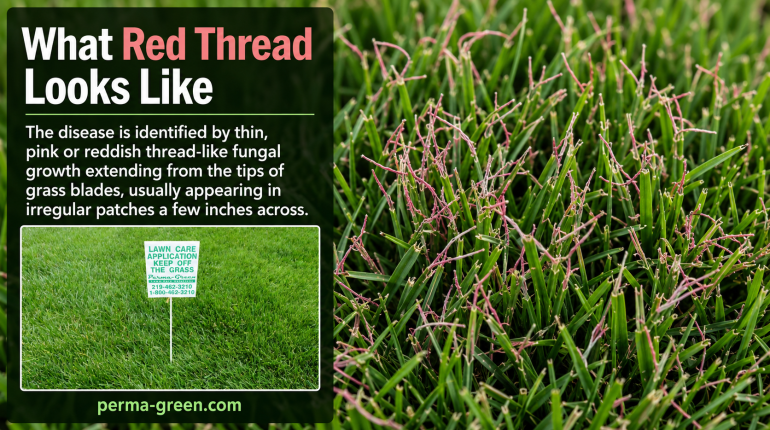
The disease is identified by thin, pink or reddish thread-like fungal growth extending from the tips of grass blades, usually appearing in irregular patches a few inches across. From a distance, affected areas can take on a pinkish or reddish tint that’s easy to spot even from across the yard.
Why It Happens - and Why It’s More Manageable Than It Looks
Despite how it looks, red thread is generally one of the more treatable lawn diseases once properly identified. It thrives in the same humid, wet conditions driving this season’s broader disease pressure, and like the other fungal issues we’re covering, it responds poorly to extra watering on top of active symptoms.
Don’t Confuse It With Early Dollar Spot
Because it’s so visually distinct, red thread is one disease homeowners often self-diagnose correctly - but it’s still worth confirming, since early red thread can sometimes be mistaken for the early stages of dollar spot before the reddish threads become fully visible. The two diseases need different treatment, so getting the identification right matters even when you’re fairly confident.
Confirm It Before You Treat It
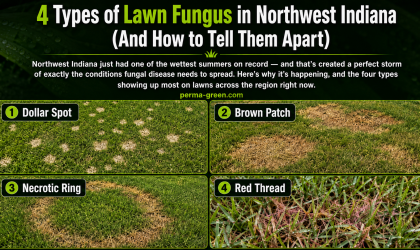
If you’re seeing pink or reddish coloring in patches across your lawn, don’t panic - this is one of the more manageable diseases on this list. Not sure if it’s a disease at all? Rule out heat and drought stress first, or see the four common fungal types we’re tracking this season. Perma-Green’s technicians can confirm red thread on-site and get treatment started before it spreads further. Get a free lawn evaluation to get started.

What Comes Next: Fall Lawn Recovery
Red thread often shows up when turf is stressed or underfed, so recovery should include diagnosis and a properly timed fertility plan.
If fungus, heat stress, drought stress, heavy rain, or thinning turf weakened your lawn this summer, fall is the recovery window.
Fall fertilizer helps the lawn rebuild strength, support root growth, store nutrients before winter, and prepare for healthier growth when the ground thaws in spring.
READ:
Northwest Indiana Lawn Recovery Starts This Fall
Why Fall Fertilizer Is the MVP Treatment for Northwest Indiana Lawns
Not sure what is affecting your lawn?
Get a free Perma-Green lawn evaluation before guessing at the fix.