
Necrotic Ring Spot: Symptoms and How It Differs from Brown Patch
Necrotic ring spot is one of the fungal diseases that gets mixed up with brown patch more than any other, and this wettest summer on record is exactly the kind of season where telling them apart actually matters - the two diseases don’t respond to identical treatment.
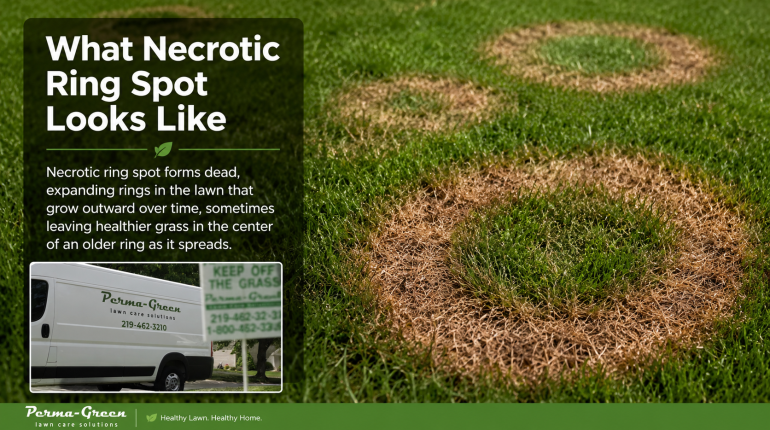
What Necrotic Ring Spot Looks Like
Necrotic ring spot forms dead, expanding rings in the lawn that grow outward over time, sometimes leaving healthier grass in the center of an older ring as it spreads.
How It Differs From Brown Patch
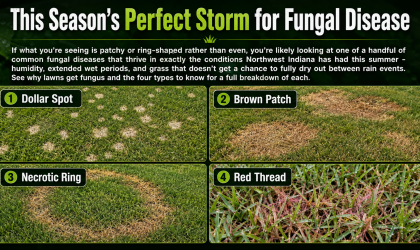
Brown patch also forms circular damage, but its identifying feature is a darker “smoke ring” border around the edge of the patch - a detail necrotic ring spot doesn’t share in the same way. The other key difference is behavior over time. Necrotic ring spot tends to be more stubborn and slower to resolve than brown patch, and it can return in the same area in following seasons if the underlying turf stress isn’t addressed. Brown patch, by contrast, often clears up more directly once conditions improve and treatment is applied.
Why Confirming the Diagnosis Matters Here
Because the visual difference between the two can be subtle, especially early on, this is one case where getting a confirmed diagnosis before treating is particularly worthwhile - treating necrotic ring spot like brown patch, or vice versa, can waste a treatment cycle during a season that’s already putting extra stress on Northwest Indiana lawns.
Confirm It Before You Treat It
If you’re seeing ring-shaped damage and aren’t sure which disease you’re dealing with, Perma-Green’s OISC-certified technicians can tell the two apart on-site and recommend the right course of treatment for the one that’s actually present. Not sure if it’s disease at all? Rule out heat and drought stress first, or see the four common fungal types we’re tracking this season. Get a free lawn evaluation to get started.
What Comes Next: Fall Lawn Recovery
Because necrotic ring spot can damage roots and spread outward over time, recovery should focus on long-term lawn strength, not just surface appearance.
If fungus, heat stress, drought stress, heavy rain, or thinning turf weakened your lawn this summer, fall is the recovery window.
Fall fertilizer helps the lawn rebuild strength, support root growth, store nutrients before winter, and prepare for healthier growth when the ground thaws in spring.
READ:
Northwest Indiana Lawn Recovery Starts This Fall
Why Fall Fertilizer Is the MVP Treatment for Northwest Indiana Lawns
Not sure what is affecting your lawn?
Get a free Perma-Green lawn evaluation before guessing at the fix.